Keynote Speakers
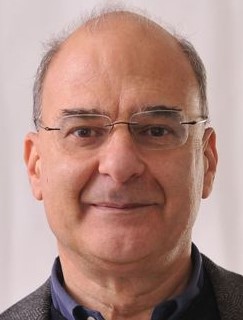
Giovanni Adorni, University of Genoa, Italy
Title:
Cyber Humanism in Education: Reclaiming Agency through AI and Learning Sciences
Abstract:
In the age of generative AI, education must evolve from passive technology adoption to active co-authorship of learning infrastructures. Cyber Humanism offers a framework to reclaim human agency, positioning educators and learners as epistemic agents who shape – rather than merely use – intelligent systems. This keynote explores how reflexive competence, algorithmic citizenship, and dialogic design can transform AI from a disruptive force into a catalyst for democratic, human-centered education.
Bio:
Giovanni Adorni is a former professor of Computer Science at the University of Genoa. During his forty-five-year career, he has been a pioneer in Artificial Intelligence, making contributions to areas such as computer vision, autonomous vehicles, robotics and natural language processing. His research has evolved to encompass the combination of symbolic and sub-symbolic approaches, as well as the application of AI to Digital Humanities. A long-standing expert in technology-enhanced learning, he has coordinated numerous national and European projects and promoted Master’s and PhD programmes in Digital Humanities. He has received numerous international awards and honours, including the recent IEEE Systems, Man, and Cybernetics Education and Training Award for his work on Cyber Humanities. He is a Fellow of EURAI and of the Asia-Pacific Artificial Intelligence Association and a former president of the Italian Association for Computer Science (AICA). His current work focuses on integrating generative AI and conversational agents into educational practices and humanities research.

Beata Klebanov, ETS Research Institute, US
Title:
Language Technology for Learner Modeling
Abstract:
Language is a medium of much of human learning; as such, automated analysis of language at scale can help organize, facilitate, and assess learning. In the presentation, we will take stock of a decade of research that utilized natural language processing to aid learner modeling research, consider some examples from my research on supporting reading development with language technology, as well as look forward to new directions at the intersection of language technology and learning sciences that are enabled by the dramatic advances in conversational AI.
Bio:
Dr. Beigman Klebanov is a Principal Research Scientist at the ETS Research Institute where she has led and co-led R&D projects on developing language technology to support acquisition of skills that pertain to effective use of language. The projects include automated scoring of essays in various genres, automated feedback for self-regulated writing support, a system for interleaved listening and reading to support acquisition of reading fluency, a system for evaluating teacher contributions in a simulated classroom discussion. Her research has been published in the International Journal of AI in Education, Journal of Research on Technology in Education, Journal of Computer Assisted Learning, Journal of Educational Psychology, and Language Testing, among others. She has served two terms (2020-2024) as an action editor of the Transactions of the ACL and is now serving as an action editor of the International Journal of AI in Education. She is an author of two monographs – “Metaphor: A Computational Perspective” (with Tony Veale and Katia Shutova, 2016) and “Automated Essay Scoring” (with Nitin Madnani, 2021). She is a member of NSF National AI Institute for Innovative Intelligent Technologies for Education (https://invite.illinois.edu/). She is a long-time member of ACL SIGEDU (https://sig-edu.org/).

Maria Ranieri, University of Florence, Italy
Title:
Beyond the Paradoxes of Artificial Intelligence in Education: Toward a Pedagogically Sustainable Human–Machine Cooperation
Abstract:
The integration of Artificial Intelligence into educational processes opens promising yet complex horizons, confronting pedagogy with a series of paradoxes: automation vs autonomy, mimesis vs trust, opacity vs transparency, efficiency vs reflexivity. These tensions reveal not only technological dilemmas but also epistemological and ethical questions about the meaning of learning and the role of the human in knowledge production. This presentation examines such paradoxes through the lenses of learning theories and critical pedagogy, proposing a framework for human–machine cooperation grounded in transparency, responsibility, and participation. In this view, AI does not replace but rather augments human intelligence, supporting educational practices that foster autonomy, creativity, and critical awareness. The goal is to outline a pedagogical horizon in which AI becomes not a technology of control but a space for co-construction, reflection, and shared meaning-making in learning.
Bio:
Maria Ranieri, PhD, is Full Professor of Education at the University of Florence, Italy, where she serves as Rector’s Delegate for Digital Innovation in Teaching and coordinates the Task Force on Artificial Intelligence for Teaching and Learning. She directs the Laboratory of Educational Technologies and the Master’s in Digital Competences. Her research explores the intersections of technology, pedagogy, and human learning, focusing on the ethical and cognitive dimensions of digital innovation. Since 2007, she has advanced critical and human-centered approaches to AI in education, promoting critical digital literacy and reflective judgment. Author of over 200 publications, including seminal works in leading journals and books such as Artificial Intelligence in School (Palgrave Macmillan, forthcoming), she has led more than 25 research projects and advises European and national institutions on digital education. She co-edits Computers & Education and Journal of Media Literacy Education.